How a $284M Credit Union Produced One of the Strongest Stories in ACU's Diamond Awards First Alliance Credit Union · Rochester, MN
The Story
Gabe Green owns Quality Cleaning Minnesota, a commercial, residential, and post-construction cleaning company in Rochester, MN. When he needed a small business loan for cash flow, he had everything necessary for an approval but couldn't get it. Multiple lenders rejected him. At one institution, his application sat on a desk untouched for a month.
Minority owned businesses just do not get the same opportunities. Gabe Green, Owner, Quality Cleaning Minnesota
He'd reached a breaking point and wanted to give up.
Then something unexpected happened. From the credit union's webpage dedicated to Gabe's story:
"Through a recommendation from Rochester's mayor, Gabe connected with First Alliance Credit Union. From the moment he walked in, the tone was different."
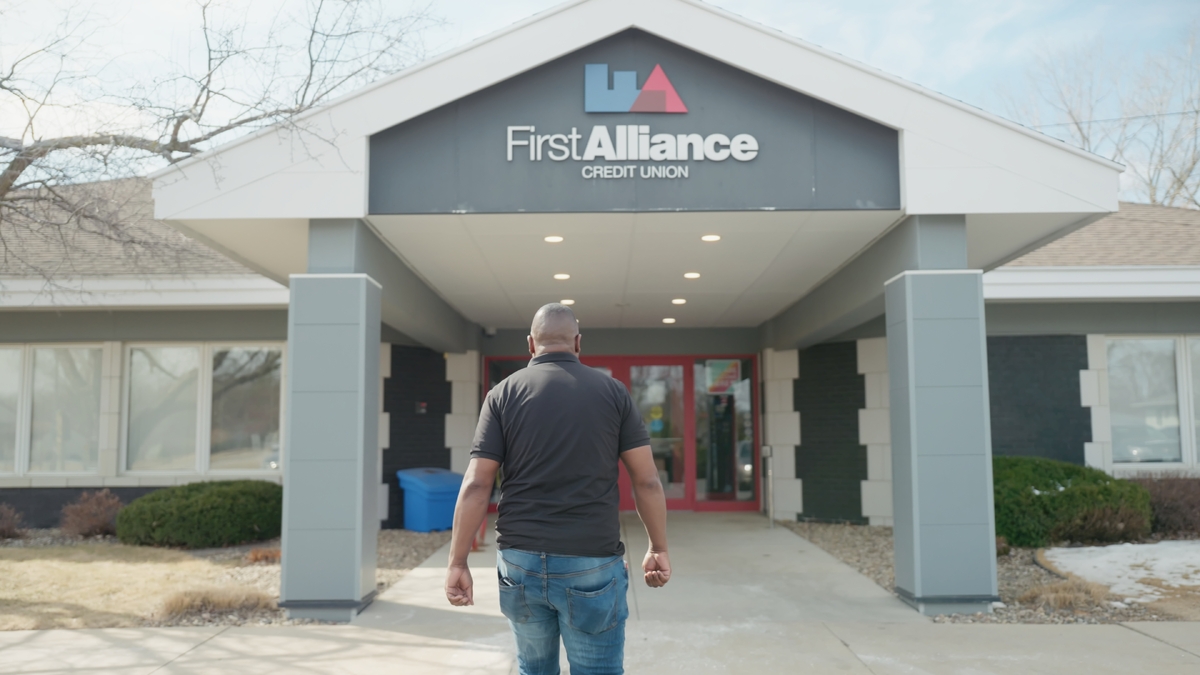
I hadn't filled out an application. I hadn't even opened an account. And she asked me, 'How can we help you?' It was powerful.
Gabe GreenThat simple question carried more weight than a loan approval. It meant Gabe was being seen, heard, and supported. Instead of more red tape, Gabe found support, trust, and a team that treated him like his dreams mattered.
Today, Gabe describes First Alliance as more than a lender: "I've never been invited by a financial institution, as a small business owner, to come and share my vision, my story, my dreams, with an institution, and here, with First Alliance, I've been able to do that."
What First Alliance Did Right
First Alliance's video featuring Gabe, along with numerous other entries from the 2026 America's Credit Unions Diamond Awards, was independently analyzed with StoryScore, a 10-dimension diagnostic framework for evaluating credit union storytelling quality.
Gabe's video received the second-highest StoryScore of all the entries analyzed. Here's what set it apart:
First Alliance let Gabe drive the story
In the majority of credit union storytelling content, the institution is the protagonist — "we helped," "our team stepped in," "we provided." In Gabe's video, he identified his need, prepared his documentation, was rejected, nearly gave up, and connected with First Alliance. He is unquestionably the main character. The credit union enters as a resource within Gabe's story, not as the hero of its own.
They showed the friction
Most credit union content presents institutional interactions as frictionless through phrases like "quickly approved" and "seamless process." Gabe's video shows rejection, delay, systemic barriers, and a man who had given up. The friction is what makes the resolution meaningful. When Gabe says "she asked me, 'How can we help you?'" — that question carries weight precisely because of everything that came before it.
They let him name the systemic dimension
"Minority owned businesses just do not get the same opportunities." This single sentence elevates the story from a personal anecdote to a statement about structural inequity in lending. First Alliance cared enough about Gabe to see his whole situation and make a different underwriting decision when traditional institutions wouldn't. That distinction is communicated through Gabe's experience, not through institutional marketing language.
They chose format over production
The video uses a standard two-camera interview setup with b-roll of Gabe at his business and at the credit union branch. No stock footage, no actors, no custom production techniques. At 2 minutes and 30 seconds, it gave Gabe enough time to talk about the rejections, the low point, the turning point, the outcome. The format is the strategy: long-form, unscripted, member-driven.
They built a durable asset
First Alliance created a dedicated case study page on their website for Gabe's story. This signals that the credit union treats member stories as permanent institutional assets, not disposable social media content.
The Editorial Decision That Mattered Most
The submission's campaign context describes the approach: "The most powerful way to communicate purpose is to slow down and listen. By focusing on long-form, unscripted member storytelling, we learned that audiences are willing to invest time in stories that feel real, respectful, and human."
"Slow down and listen" captures the core insight. First Alliance didn't produce a commercial. They didn't write a script. They didn't shoot in a studio. They sat down with a member, asked him about his experience, and let the story come from him.

The result is content that does what mission statements claim to do but rarely demonstrate: it shows what it looks like when a credit union sees someone as an individual, makes a different decision than other institutions, and builds a relationship that extends beyond a single transaction.
What Other Credit Unions Can Learn
The format is replicable. Any credit union with a camera and a willing member can produce this kind of content. The requirements are editorial, not technical: choose a member with a genuine story, give them enough time to tell it (2+ minutes), don't script the conversation, and let the friction show.
The story exists in your membership. Gabe Green was a small business owner who needed a loan and got rejected by other lenders. He's not a celebrity or an exception. Every credit union has members with stories like this; members who tried other institutions first, who faced obstacles, who found something different at the credit union. The stories are there. The question is whether the credit union makes room for them.
Friction is an asset, not a liability. The instinct to remove difficulty from member stories — to present every interaction as quick, easy, and seamless — is the instinct that produces low-impact content. Gabe's story works because he was rejected by other lenders, because he nearly gave up, because the credit union's response was unexpected. The messy middle is where the story lives.
About StoryScore
StoryScore looks at the story structure itself to measure whether content functions as an actual narrative with a protagonist, stakes, genuine tension, and transformation. It's like a home inspection for your entire storytelling process. The framework was developed through analysis of over 1,500 credit union stories and applies storytelling best practices to credit union communications.
Learn more at MakeGreatStories.com
This case study was produced with the knowledge and permission of First Alliance Credit Union. All transcript quotes are verbatim from the published video. The StoryScore evaluative framework is not affiliated with ACU or First Alliance Credit Union, and was not used in the Diamond Awards judging process.
What are your stories really doing?
StoryScore provides systematic analysis: which content functions as stories, what patterns are holding you back, and specific improvements that help you stand out.
Get Your StoryScore Report